
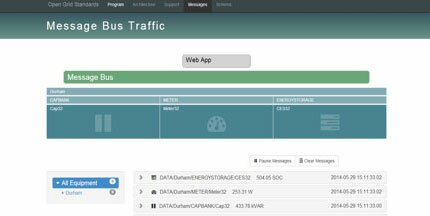
The ‘Large Utility Low Latency Messages & Distributed Systems’ project illustrates Green Energy Corp’s role in one of the most technically important areas of modern grid operations: the movement of critical information across distributed systems with the speed and reliability required for advanced control. Green Energy Corp’s projects page describes the case by stating that the company is working with key investor-owned utilities, which frames the effort as more than a theoretical software exercise. It suggests active collaboration with major utility organizations that need communications infrastructure and message orchestration capable of supporting real operational decisions in increasingly distributed power environments. In the context of grid modernization, low-latency messaging is not a background feature—it is a prerequisite for coordination among field devices, control applications, distributed energy resources, and central systems.
As electric utilities add more renewables, storage, intelligent devices, and edge-based control functions, the amount of information moving through the network increases dramatically. At the same time, the acceptable delay for some of that information becomes much smaller. If communications are too slow, too brittle, or too fragmented across proprietary systems, utilities struggle to achieve the responsiveness needed for advanced distribution automation, microgrids, and high-penetration DER environments. That is what makes projects like this strategically important. They are focused not simply on IT modernization, but on creating the digital backbone that enables utilities to trust, scale, and operationalize next-generation energy systems. Green Energy Corp’s longstanding emphasis on interoperability, open messaging, and distributed coordination strongly aligns with these needs.
The project also speaks to Green Energy Corp’s value in integrating engineering objectives with enterprise-scale operational realities. Investor-owned utilities require more than fast data exchange in isolation; they need secure, dependable, standards-aware communications that can connect legacy infrastructure with emerging platforms. They also need architectures that remain manageable over time as the number of devices, use cases, and automation scenarios grows. A distributed systems project in this category therefore has implications far beyond one application. It can influence how utilities design for scalability, how they support local intelligence in the field, and how they reduce friction between centralized oversight and decentralized action. In that sense, the project helps define the conditions under which grid-edge intelligence can function reliably at utility scale.
As expanded website text, this case can be positioned as evidence that Green Energy Corp is not only a microgrid software company, but also a partner in the communications and systems architecture that modern grids require. The project reflects work at the foundation layer of utility modernization—where timing, interoperability, and distributed logic determine whether advanced applications can perform as intended. For potential clients, the message is compelling: Green Energy Corp understands that resilient, flexible, and intelligent energy systems depend on more than devices in the field; they depend on a software and messaging architecture that can move the right information to the right place at the right time. This project therefore showcases the company’s capacity to support utilities building the digital infrastructure necessary for the next era of electric operations.