
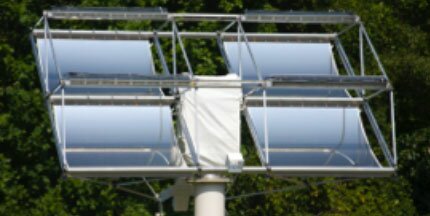
The MegaWatt Control System Development Project reflects Green Energy Corp’s involvement in advanced control work associated with emerging energy technologies and specialized generation concepts. On the company’s public projects page, the case is introduced with the note that MegaWatt Solar, Inc. was a start-up in concentrated solar power, immediately placing the project within an innovation-oriented context where technology development and control strategy are tightly linked. While the public summary available on the site is brief, the project title itself points to the central challenge: development of the control system required to support a novel energy solution. That kind of work is often where Green Energy Corp’s expertise becomes especially valuable, because control development sits at the intersection of hardware behavior, communications, software logic, and operational reliability.
Control systems are what turn energy assets into functional operating platforms. In advanced generation and smart grid environments, the physical equipment alone does not define performance; performance depends on how that equipment is monitored, synchronized, and directed under changing conditions. For a start-up technology company, this is even more important, because the control layer often determines whether a promising energy concept can move from prototype-level ambition to field-ready practicality. A development project in this category therefore requires more than generic automation. It calls for the ability to interpret a novel technical application, translate it into a responsive control architecture, and build software logic that supports safe, reliable, and scalable operation. Green Energy Corp’s background in interoperability, automation, and microgrid software makes it well suited to exactly this type of engineering challenge.
The broader significance of this project lies in its demonstration of Green Energy Corp’s flexibility. Many companies can support standard deployments once a technology and use case are already well defined. Far fewer can contribute effectively in development-stage environments where design assumptions are still being tested and where the control framework must evolve alongside the underlying energy concept. The MegaWatt case suggests a capability not only to implement established systems, but also to help shape how new technologies are operationalized. That strengthens Green Energy Corp’s profile as a partner for innovation-driven organizations—particularly those working on clean energy platforms that require custom logic, integrated controls, and a path from technical promise to repeatable system behavior.
As expanded website copy, this project can be described as a case that underscores Green Energy Corp’s ability to contribute to technology development, not just deployment. The MegaWatt Control System Development Project highlights the company’s role in building the software and control intelligence needed to make advanced energy concepts usable, stable, and commercially relevant. It also demonstrates experience in working with entrepreneurial and innovation-focused organizations navigating the transition from concept to operation. For prospective clients and partners, the message is clear: Green Energy Corp can step into projects where technical novelty creates complexity, and can help transform that complexity into a structured control solution that supports real-world execution and future growth.