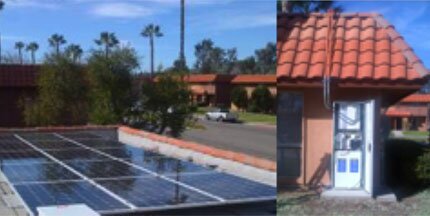
The Multifamily Housing Converged PV and Battery Project demonstrates Green Energy Corp’s ability to apply distributed energy solutions in the built environment, where value is created not only through system performance but also through ownership structure, customer economics, and long-term operational practicality. Green Energy Corp’s public project page states that the company owns and operates three systems installed at multifamily housing facilities in San Diego, California. These systems were designed to support common-area electric loads at each complex. The page further explains that two sites include a 3 kW PV array paired with a 4.5 kW / 11.6 kWh battery storage system, while the larger system includes a 20 kW PV array and five battery systems. The project also operates under a power purchase agreement structure involving electricity sales and shared incentives tied to utility demand response participation, while the storage systems qualified for California’s Self Generation Incentive Program.
This combination of technical design and commercial structure makes the project especially noteworthy. Many distributed energy case studies focus on either hardware performance or financing, but this project shows how the two can reinforce one another when carefully aligned. By targeting common-area loads at multifamily housing properties, the systems address an energy need that is visible, practical, and potentially repeatable across similar housing portfolios. By pairing solar PV with battery storage, the project adds flexibility and resilience beyond what solar alone can deliver. And by operating under a power purchase agreement with shared incentive value from demand response participation, the project illustrates how distributed energy assets can be structured to create mutual benefit for site hosts and project operators. In other words, the case is not simply about installing clean technology; it is about turning that technology into a durable operating model.
The project is also important because multifamily housing occupies a challenging but high-impact segment of the energy transition. These sites often have meaningful common-area loads, space constraints, varied ownership considerations, and residents who benefit indirectly from better building performance and cost control. A successful converged PV and storage strategy in this environment must therefore be technically right-sized, financially workable, and simple enough to operate reliably over time. Green Energy Corp’s ownership and operational role suggests a hands-on approach that goes beyond design support and into asset stewardship. That is a powerful signal for clients and partners looking for energy providers that understand not just how to deploy systems, but how to keep them performing in the context of real properties and real contractual frameworks.
As fuller website copy, this project can be presented as a model for practical distributed energy deployment in multifamily settings. It reflects Green Energy Corp’s ability to combine solar, storage, operating expertise, and incentive-aware project structuring into solutions that support everyday energy use while creating longer-term resilience and economic value. It also broadens the company narrative beyond utility and military microgrids by showing that its skills translate effectively into property-based energy applications with repeatable commercial potential. For housing operators, developers, and energy partners, the message is straightforward: Green Energy Corp can help design and operate distributed energy systems that are technically sound, financially intelligent, and tailored to the realities of the properties they serve.